
Logos are one of the most important visual elements of a brand. They appear on uniforms, caps, jackets, workwear, bags, promotional products, and many other items. A logo that looks sharp on a website or printed business card does not automatically mean it will look good when stitched with thread. 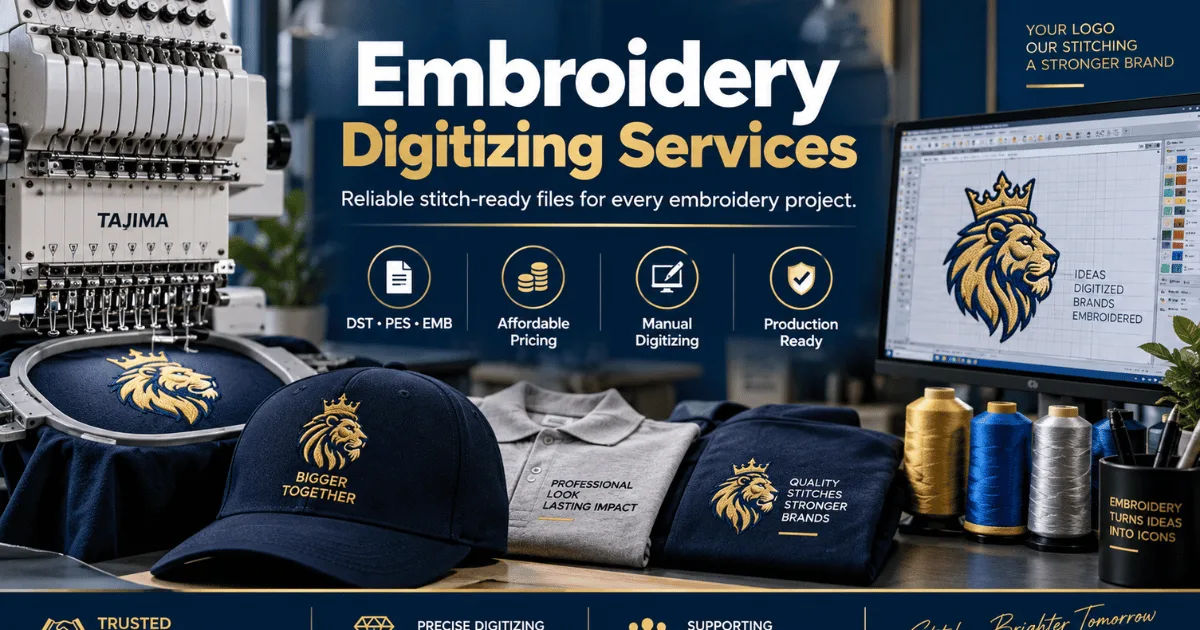
A good logo needs to be converted into an embroidery-ready design before it can be stitched properly. This process involves deciding stitch types, stitch directions, densities, underlay, thread colors, sequencing, and other technical details. Using a digitizing embroidery service can make this process much easier because trained digitizers understand how artwork needs to be adjusted for real fabric and embroidery machines.
For businesses, this is more than simply converting an image into stitches. It is about protecting the appearance of the brand while making sure the finished embroidery is clean, durable, and suitable for the chosen garment or product. Whether the logo is simple or highly detailed, professional digitizing can make a noticeable difference.
What Is Embroidery Digitizing?
Embroidery digitizing is the process of converting artwork into a digital embroidery file that an embroidery machine can understand.
A normal JPG, PNG, PDF, or similar image contains visual information such as colors, shapes, and lines. An embroidery machine, however, needs instructions telling it where to place stitches and how those stitches should be arranged.
The digitizer creates those instructions using specialized software.
The final file may contain different stitch types, thread colors, stitch angles, densities, trims, jumps, and other machine instructions. Common embroidery file formats include DST, PES, JEF, EXP, and several others.
The important point is that professional digitizing is not simply an automatic conversion. Good results usually require design decisions based on the artwork, fabric, garment, embroidery size, and machine being used.
Why Logos Need Professional Digitizing
A logo may look perfect on a computer screen but behave very differently when stitched.
For example, a very thin line that is clearly visible in a digital image may become too narrow to reproduce effectively with thread. Small lettering can also become difficult to read once it is converted into stitches.
Professional digitizing solves these problems by adapting the artwork to embroidery.
A skilled digitizing embroidery service can determine which elements should remain unchanged and which need slight adjustments. These changes are normally made to improve stitchability without damaging the recognizable appearance of the logo.
This is especially important for businesses because a logo represents the company. Poor embroidery can make a professional brand look unfinished or careless.
Better Stitch Quality
One of the biggest advantages of professional digitizing is improved stitch quality.
Embroidery quality depends on many factors. Stitch density, direction, underlay, pull compensation, sequencing, and stitch length can all affect the finished design.
If too many stitches are placed in a small area, the fabric may become stiff or puckered. If there are too few stitches, the design may look weak or incomplete.
An experienced digitizer understands these limitations and creates a design that balances coverage and stitch efficiency.
The result is generally smoother lettering, cleaner shapes, better coverage, and a more professional appearance.
Preserving Important Logo Details
Many logos contain details that are important to the identity of the brand.
These may include small symbols, custom lettering, borders, icons, or unique shapes. When artwork is converted without proper planning, these elements can lose their definition.
Professional digitizing focuses on preserving the details that matter most.
Sometimes this means changing stitch direction. In other cases, a tiny detail may need to be slightly enlarged or simplified so it can survive the embroidery process.
The goal is not to change the logo unnecessarily. The goal is to make the logo work in an embroidery environment.
Choosing the Right Stitch Types
Different parts of a logo may require different stitch types.
Satin stitches are commonly used for borders, lettering, narrow columns, and smooth shapes. Fill stitches are useful for larger areas. Running stitches can work well for fine outlines and delicate details.
Using one stitch type for everything can produce a poor result.
A professional digitizing embroidery service chooses stitch types according to the shape and size of each part of the artwork. This creates better texture and definition.
For example, a company name may look much cleaner when digitized with appropriate satin stitching rather than being treated as a simple fill area.
Proper Stitch Density Matters
Stitch density refers to how closely stitches are placed together.
It may sound like a small technical detail, but it can have a major effect on embroidery quality.
Excessive density can cause thread buildup, stiffness, puckering, and even fabric distortion. Insufficient density can leave gaps and allow the background fabric to show through.
The correct density depends on the design, fabric, thread, stitch type, and size.
Professional digitizers understand these relationships and adjust density accordingly rather than applying the same settings to every logo.
Better Results on Different Fabrics
A logo may be embroidered on cotton, denim, fleece, polyester, jackets, caps, towels, or performance fabrics. Each material behaves differently under a needle.
A design that works perfectly on a firm cotton shirt may not produce the same result on stretchy polyester.
Fabric movement can affect registration and cause shapes to shift.
This is one reason professional digitizing is valuable. The design can be prepared with the intended material in mind.
An experienced digitizing embroidery service can make appropriate adjustments for different fabric characteristics, helping the logo maintain its shape during stitching.
Improved Small Text
Small text is one of the most challenging elements in embroidery.
A printed font can contain very thin strokes and tiny spaces. Thread, however, has physical limitations. If the lettering is too small, individual characters can merge together or become difficult to recognize.
Professional digitizing takes these limitations into account.
The digitizer may adjust stitch direction, simplify certain areas, modify spacing, or recommend a more embroidery-friendly size.
This is particularly important for business uniforms where names, departments, websites, or short slogans may appear underneath the main logo.
Cleaner Edges and Shapes
Poorly digitized logos often show rough edges, uneven curves, or inconsistent coverage.
These problems can become especially noticeable on large logos.
Good digitizing creates controlled stitch paths that follow the shape of the artwork naturally. Curves are handled carefully, corners are planned properly, and stitch directions are organized to create a cleaner visual result.
The embroidery should look intentional rather than like a collection of random stitches.
Better Thread Management
Thread changes can influence both the appearance and production time of an embroidered logo.
If color sequencing is poorly planned, the machine may make unnecessary color changes or jumps.
Professional digitizing organizes the design logically.
The digitizer can determine a sensible stitch sequence that reduces unnecessary movement while maintaining the correct visual layering.
This can make the embroidery process more efficient and reduce avoidable production issues.
Reducing Puckering and Fabric Distortion
Puckering occurs when the fabric gathers or wrinkles around embroidered areas.
It can happen for several reasons, including excessive density, poor stabilization, incorrect underlay, fabric movement, or unsuitable stitch settings.
While digitizing alone cannot solve every embroidery problem, a properly prepared file can significantly reduce design-related causes.
An experienced digitizer considers how the fabric is likely to react to the stitches.
This is another reason businesses often prefer a professional digitizing embroidery service rather than relying entirely on automatic software conversions.
Understanding Underlay
Underlay is a foundation layer of stitches placed beneath the main embroidery.
It helps stabilize the fabric and provides support for the visible stitches.
Different designs may require different underlay approaches.
Without suitable underlay, satin columns may look weak, filled areas may lose their shape, and the embroidery may not sit correctly on the fabric.
Professional digitizers know when and where underlay is useful. They also understand that too much underlay can create unnecessary bulk.
Consistent Branding Across Products
Businesses rarely use their logos on only one product.
The same logo may appear on shirts, caps, jackets, bags, uniforms, and promotional merchandise.
The design needs to remain recognizable across these applications.
A professional digitizing workflow can create versions suitable for different sizes and products when necessary.
This helps maintain consistency in branding.
For example, a logo embroidered at four inches wide may need different treatment from the same logo embroidered on a small cap. Simply resizing the same file does not always produce the best result.
Getting Multiple File Formats
Different embroidery machines can require different file formats.
One machine may use DST, while another may require PES, JEF, EXP, or another format.
A professional digitizing embroidery service can often provide the required format based on the customer's machine specifications.
This is useful for businesses that work with different embroidery suppliers.
Instead of recreating the design from scratch every time, the customer can keep the master digitized artwork and request the appropriate machine format when needed.
Saving Time for Businesses
Learning embroidery digitizing software takes time.
There is a difference between knowing how to operate software and knowing how to prepare designs that stitch successfully.
Business owners usually have other responsibilities. Spending hours experimenting with stitch settings may not be the best use of their time.
Outsourcing the work allows them to focus on customers, operations, marketing, and production while an experienced digitizer handles the technical preparation.
This can be particularly useful when several logos or variations are required.
Reducing Costly Embroidery Mistakes
A failed embroidery run can waste more than thread.
Depending on the product, mistakes can damage shirts, jackets, caps, uniforms, or other expensive items.
A poorly prepared file may require multiple test runs before the desired result is achieved.
Professional digitizing can reduce this risk by preparing the design with embroidery limitations in mind.
It is still wise to test important designs, especially when working with unusual fabrics or large quantities. However, starting with a professionally prepared file gives the production process a much stronger foundation.
Why Automatic Conversion Is Not Always Enough
There are software tools that automatically convert images into embroidery designs.
These tools can be useful in certain situations, especially for simple artwork.
However, automatic conversion cannot always understand what the human eye considers important.
A computer may treat every visible detail equally. A skilled digitizer knows that some details need priority while others may need to be simplified.
Automatic conversion can also produce unnecessary stitches, poor sequencing, incorrect densities, or awkward stitch directions.
For basic logos, automation may have a place. For professional branding, manual refinement is often worth the extra effort.
When Should You Hire a Professional Service?
A professional service is especially useful when the logo contains multiple colors, detailed lettering, small elements, gradients, complex shapes, or fine outlines.
It is also a good choice when the logo will be embroidered on several different products.
Businesses producing uniforms or promotional merchandise can benefit because consistency matters across large quantities.
If the logo is going to be used repeatedly, investing in a properly digitized master file can save time and frustration later.
What to Send to the Digitizer
The better the source information, the easier it is to prepare an accurate embroidery file.
Ideally, provide the highest-quality version of the logo available.
Vector artwork such as AI, EPS, or SVG can be especially useful, although many professional digitizers can work with JPG and PNG files as well.
It is also helpful to provide the desired embroidery size, garment type, fabric type, thread colors, and required file format.
If the logo will be placed on a cap, sleeve, chest, jacket, or another specific location, mention that as well.
How to Choose a Good Digitizing Service
Not every service provides the same level of quality.
Look for examples of actual embroidered work rather than only digital previews.
A good portfolio should show clean lettering, smooth curves, consistent coverage, and well-controlled details.
It is also worth checking whether the service offers revisions.
Embroidery is a physical process, so occasional adjustments are normal. A service that is willing to refine a design after testing demonstrates a better understanding of real-world production.
Communication also matters. The digitizer should be willing to ask questions when artwork, sizing, or fabric information is unclear.
What About Pricing?
The price of logo digitizing can vary depending on the complexity of the artwork.
A simple one-color logo may require relatively little work. A detailed logo with several colors, small lettering, complex shapes, and multiple stitch types can require significantly more time.
The cheapest option is not necessarily the best option.
If a low-cost file produces poor embroidery, the customer may spend more money fixing the problem later.
For a business logo that will be used repeatedly, quality should generally be considered alongside price.
Can One Logo Need More Than One Digitized File?
Yes.
Different embroidery applications can require different approaches.
A large jacket-back design may need a different stitch structure from a small left-chest logo. A cap design may require adjustments because of the curved surface.
Simply scaling the same file up or down is not always enough.
A professional digitizing embroidery service can create size-specific versions when the application demands it.
This helps maintain quality across different products instead of forcing one file to handle every situation.
Professional Digitizing Supports Long-Term Branding
A business logo is an investment.
Once a company has a recognizable visual identity, it may use that logo for years across uniforms, merchandise, events, packaging, and marketing materials.
A professionally digitized version becomes another useful part of the brand's production assets.
Keeping the original embroidery files organized can also make future orders easier.
Instead of starting from scratch, the business can return to the approved design and request the appropriate format or size.
For clean and reliable embroidery digitizing, PSA Digitizing offers a simple solution for businesses, professionals, and hobbyists. We transform your artwork and logos into embroidery-ready files in popular formats including DST, PES, JEF, and more. Based in Clarkston, Georgia, USA, our team uses modern digitizing software alongside skilled craftsmanship to produce smooth stitching, accurate details, and dependable machine-ready results.
We understand that good digitizing is about more than simply converting an image, which is why we pay close attention to how each design will actually stitch. With a 4.5+ star rating on Trustpilot, PSA Digitizing has built a reputation for quality work, friendly service, and reliable turnaround times. From custom patches to business logos and machine embroidery files, we keep the process straightforward from beginning to end. Visit psadigitizing.com to submit your artwork today.
Conclusion
Using a professional digitizing embroidery service for logos makes sense when quality, consistency, and reliability matter. Embroidery is not simply a matter of placing a digital picture into a machine. The artwork has to be translated into stitches that can work with thread, fabric, needle movement, density, and the physical limitations of embroidery.
Professional digitizing helps preserve important logo details while making the artwork practical for stitching. It can improve lettering, edges, stitch direction, density, underlay, sequencing, and overall appearance.
The biggest advantage is consistency. A professionally prepared logo is more likely to produce dependable results across shirts, jackets, caps, bags, uniforms, and other products.
For businesses, that consistency can have a real effect on how professional their brand looks. A clean embroidered logo gives customers and employees a polished impression, while poor embroidery can make even a strong brand identity look careless.
Choosing a digitizing embroidery service is therefore not just about getting a file. It is about preparing artwork correctly for a physical production process.
If the logo is simple and the application is basic, automatic tools may sometimes be sufficient. But when the logo represents a business, contains small details, needs to work on multiple products, or will be produced in larger quantities, professional digitizing is usually the safer choice.
In my experience, the best embroidery results start long before the needle touches the fabric. They start with a well-planned digital file. Getting that foundation right can reduce production problems, protect the appearance of the logo, and make the finished embroidery look much closer to the original brand design.
A professionally digitized logo is ultimately an investment in repeatable quality. Once the file is prepared correctly, it can support future embroidery orders and help keep the brand's appearance consistent wherever the logo is stitched.