
When planning a kitchen renovation, one of the most common questions homeowners ask is whether cabinets should be installed before countertops. Understanding the correct installation order is essential for achieving a beautiful, functional, and long-lasting kitchen. In most renovation projects, cabinets are installed first, followed by countertop measurements, fabrication, and installation. 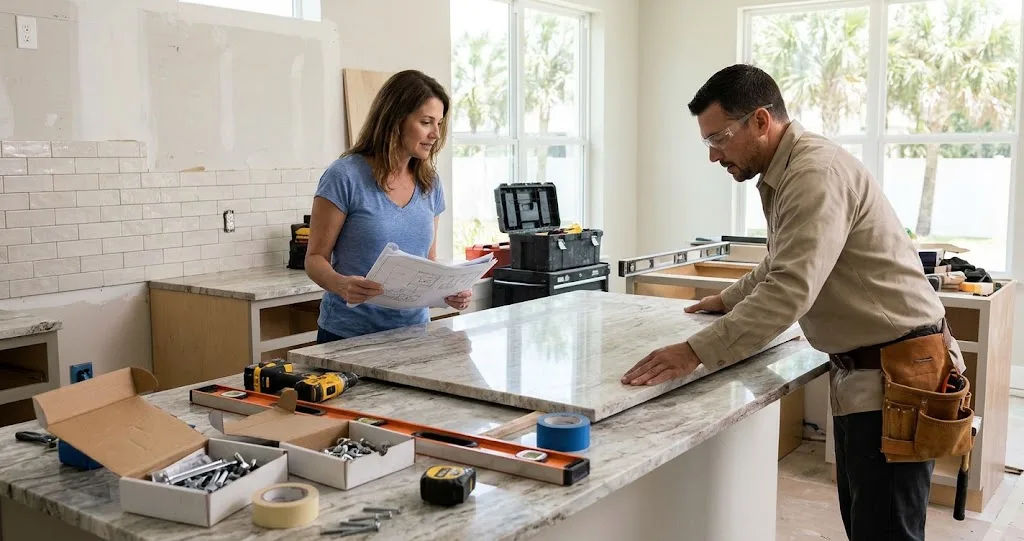 This sequence helps ensure that countertops fit properly and remain stable for years.
For homeowners planning countertop installation Jacksonville FL, understanding how cabinets and countertops work together can make the entire renovation process easier. Cabinets provide the foundation that supports countertops, so their placement, alignment, and stability must be checked before countertop work begins. Installing countertops too early can create unnecessary adjustments, additional expenses, and potential installation problems.
The correct installation sequence also helps contractors coordinate plumbing, electrical work, appliances, and finishing details. Whether you are remodeling a small kitchen or designing a completely new space, knowing what happens at each stage will help you make informed decisions.
Let's explore why cabinets generally come first, how the installation process works, and what homeowners should expect before their new countertops are installed.
Why Are Cabinets Installed Before Countertops?
Cabinets are normally installed before countertops because they provide the structural support needed to hold the countertop securely. Without properly installed cabinets, contractors cannot accurately determine the final dimensions or positioning of the countertop.
Kitchen cabinets also establish the height, layout, and overall design of the workspace. Once they are secured, installers can measure the available surface and prepare countertops that fit the actual dimensions.
Several important reasons explain this installation order.
Cabinets Provide Essential Structural Support
Countertops can be heavy, especially when homeowners choose natural stone, quartz, or other solid-surface materials. These materials require a stable and level foundation to prevent movement, cracking, or uneven weight distribution.
Cabinets distribute the countertop's weight across their frames and supporting structures. If cabinets are not properly secured, the countertop may experience unnecessary stress.
Installing cabinets first allows contractors to inspect their strength and make any required adjustments before placing the countertop.
Accurate Measurements Depend on Cabinet Placement
Even small differences in cabinet positioning can affect countertop dimensions. A cabinet that is slightly out of alignment can create gaps or uneven edges.
After cabinets are installed, professionals can measure the exact length, width, depth, and configuration of the countertop.
These measurements also account for backsplashes, sinks, cooktops, overhangs, and other design features.
For countertop installation Jacksonville FL, accurate measurements are particularly important when homeowners select custom-fabricated surfaces that cannot easily be modified after production.
Proper Cabinet Alignment Prevents Future Problems
Cabinets must be level and properly aligned before countertops are installed. If the cabinet frames are uneven, the countertop may not sit correctly.
This can cause visible gaps, unstable sections, or stress points.
Professional installers use leveling tools and appropriate adjustment techniques to ensure that the cabinet surfaces create a reliable foundation.
What Is the Correct Order for Cabinet and Countertop Installation?
A successful kitchen renovation requires proper planning and coordination. Although individual projects may involve additional steps, most follow a similar installation sequence.
Step 1: Finalize the Kitchen Design
Before purchasing cabinets or countertops, homeowners should finalize their kitchen layout.
This includes deciding where cabinets, appliances, sinks, and other fixtures will be positioned.
Homeowners should also select their preferred countertop material, color, thickness, and edge profile.
Planning these details early helps contractors understand the project's requirements and avoid unnecessary design changes.
Step 2: Prepare the Kitchen Space
The existing kitchen must be prepared before new cabinets are installed.
This may involve removing old cabinets, countertops, appliances, flooring, and plumbing fixtures.
Contractors should also inspect walls, floors, and other structural surfaces for damage.
If electrical or plumbing modifications are necessary, they should be coordinated before the cabinets are permanently installed.
Step 3: Install the Cabinets
Once the preparation work is complete, cabinet installation begins.
Installers position the base cabinets according to the approved kitchen layout. They carefully check cabinet height, alignment, spacing, and stability.
Upper cabinets are generally installed before or during this stage, depending on the project's layout and installation method.
Base cabinets receive particular attention because they directly support the countertops.
Step 4: Inspect and Level the Cabinets
After the cabinets are positioned, installers check whether everything is level and properly secured.
They examine cabinet connections, supporting frames, and wall attachments.
Any necessary adjustments should be completed before countertop measurements begin.
This stage is important because countertop materials are manufactured according to specific dimensions.
Step 5: Measure the Countertops
Once the cabinets are secure, countertop professionals take precise measurements.
They identify the locations of sinks, faucets, cooktops, corners, and other openings.
For complicated layouts, installers may create a physical template or use digital measuring equipment.
This information is sent to the fabrication team so the countertop can be manufactured to match the actual kitchen layout.
Step 6: Fabricate the Countertop
After measurements are approved, the countertop material is cut and prepared.
Depending on the selected material, fabrication may include cutting, polishing, edge shaping, and creating openings for sinks or appliances.
Natural stone and quartz usually require specialized equipment and experienced fabricators.
Step 7: Install the Countertop
The finished countertop is transported to the property and carefully positioned on the cabinets.
Installers check the fit, alignment, seams, and overhangs.
They then secure the countertop using appropriate installation materials and techniques.
Some materials also require sealing or other finishing procedures.
Step 8: Complete Plumbing and Finishing Work
After countertop installation, contractors can complete the remaining work.
This may include connecting the sink, installing faucets, fitting the cooktop, adding backsplashes, and completing cabinet hardware.
The final stage involves inspecting the entire kitchen to confirm that everything works correctly.
Can Countertops Be Installed Before Cabinets?
In most standard kitchen renovation projects, installing countertops before cabinets is not recommended.
The cabinets establish the measurements and support required for the countertop. Without them, contractors may have difficulty determining the exact dimensions and ensuring proper stability.
However, certain specialized projects may involve different installation methods.
Specialized Construction Projects
Some commercial spaces and custom architectural designs use independent support structures for countertops.
In these situations, the countertop may not depend entirely on traditional cabinets.
For example, a floating countertop could be supported by reinforced brackets or a specially designed structural frame.
However, these installations require careful engineering and professional planning.
Existing Cabinet Renovations
Homeowners who are replacing only their countertops may not need new cabinets.
If the existing cabinets are structurally sound, level, and properly secured, contractors can usually install new countertops directly on them.
The important consideration is whether the existing cabinet structure can safely support the selected countertop material.
Custom Island Designs
Kitchen islands sometimes include independent support systems, decorative panels, or specialized framing.
Although the installation sequence may differ slightly, the supporting structure must still be completed and checked before the countertop is installed.
How Do Cabinets Affect Countertop Measurements?
Cabinet placement directly influences countertop dimensions and appearance.
Even small measurement errors can create noticeable problems once the countertop is installed.
Understanding these factors can help homeowners prepare for the installation process.
Cabinet Height
Standard kitchen base cabinets are commonly designed around a height of approximately 34.5 inches before the countertop is added.
With a typical countertop thickness, the finished working surface reaches approximately 36 inches.
However, custom cabinet heights may be used to accommodate accessibility needs, personal preferences, or specific kitchen designs.
Cabinet Depth
Standard base cabinets are commonly around 24 inches deep.
Countertops generally extend slightly beyond the cabinet fronts to create an overhang.
The exact measurement depends on the countertop material, cabinet design, and intended use.
Cabinet Spacing
Cabinets must be positioned according to the approved kitchen layout.
Installers must consider corner connections, appliance openings, wall dimensions, and clearance requirements.
Accurate spacing ensures that countertops fit properly without interfering with doors, drawers, or appliances.
Wall Conditions
Walls are not always perfectly straight or square.
Professional countertop installers account for these irregularities when creating templates and preparing countertop edges.
Proper measurements help minimize visible gaps between countertops and walls.
What Types of Countertops Can Be Installed After Cabinets?
Homeowners in Jacksonville have several countertop materials to consider. Each option offers different benefits, maintenance requirements, and design possibilities.
The best choice depends on budget, lifestyle, appearance, and expected usage.
Quartz Countertops
Quartz is a popular choice because it offers a consistent appearance and requires relatively little maintenance.
It is an engineered material made using natural quartz and binding components.
Its nonporous surface generally does not require routine sealing.
Quartz is available in many colors and patterns, making it suitable for contemporary and traditional kitchens.
However, homeowners should avoid exposing quartz to excessive heat because sudden temperature changes can damage the surface.
Granite Countertops
Granite is a natural stone known for its durability and distinctive patterns.
Every slab has a slightly different appearance, allowing homeowners to create a unique kitchen design.
Granite handles everyday kitchen activities well, although proper care is necessary.
Depending on the stone and manufacturer's recommendations, periodic sealing may be required to help protect against staining.
Marble Countertops
Marble offers a sophisticated appearance with natural veining and elegant colors.
It is often selected for luxury kitchens and homeowners who appreciate natural stone.
However, marble is more susceptible to scratching, staining, and etching from acidic substances.
It requires careful maintenance to preserve its appearance.
Laminate Countertops
Laminate countertops are generally more affordable than natural stone and engineered quartz.
They are available in numerous colors, patterns, and finishes.
Many modern laminate designs imitate the appearance of stone or wood.
Although they are suitable for many everyday kitchens, they can be damaged by excessive heat, sharp objects, and prolonged exposure to moisture around vulnerable seams.
How Long After Cabinet Installation Can Countertops Be Installed?
The time between cabinet installation and countertop installation depends on the project's size, material selection, and contractor schedule.
There is no single waiting period that applies to every renovation.
In many projects, countertop measurements are taken shortly after the cabinets have been completely installed, secured, and inspected.
Measurement and Templating
The templating process may take several hours, depending on the kitchen's complexity.
Once measurements are complete, the fabricator prepares the countertop.
Fabrication Time
Fabrication schedules vary according to material availability, design complexity, and the fabricator's workload.
Standard countertop selections may have shorter preparation times than custom stone slabs.
Special cutouts, unusual edge profiles, and complicated seams can require additional work.
Installation Scheduling
After fabrication is complete, the contractor schedules delivery and installation.
Homeowners should confirm the expected timeline before construction begins.
For countertop installation Jacksonville FL, coordinating the cabinet contractor and countertop fabricator can help prevent unnecessary delays.
What Should Homeowners Check Before Countertop Installation?
Before allowing contractors to install countertops, homeowners should confirm that the cabinets are ready.
A proper inspection can prevent expensive problems and improve the finished result.
Check Cabinet Leveling
Use a reliable leveling tool to confirm that the cabinet tops are even.
Uneven cabinets can create pressure points that affect countertop stability.
Inspect Cabinet Connections
Make sure adjacent cabinets are securely connected.
Loose connections can cause movement and affect the countertop's support.
Confirm Cabinet Stability
Cabinets should be properly attached to walls or other required support structures.
They should not shift when normal pressure is applied.
Verify Sink and Appliance Measurements
Confirm the dimensions and locations of sinks, cooktops, dishwashers, and other appliances.
Incorrect measurements can result in cutouts that do not match the intended equipment.
Review Countertop Details
Before fabrication, review the selected material, edge profile, thickness, overhang, and seam placement.
Confirming these details helps avoid misunderstandings during installation.
Common Mistakes to Avoid During Cabinet and Countertop Installation
Even a carefully planned renovation can experience problems if important installation details are overlooked.
Homeowners should understand common mistakes and discuss preventive measures with their contractors.
Installing Countertops on Uneven Cabinets
One of the biggest mistakes is installing countertops before checking cabinet alignment.
An uneven foundation can create stress and lead to cracks or gaps.
Always ensure that cabinets are level and secure.
Making Last-Minute Design Changes
Changing cabinet positions after countertop measurements have been completed can create additional fabrication expenses.
It may also require new templates or modifications.
Finalize the kitchen layout before scheduling measurements.
Ignoring Appliance Clearances
Homeowners sometimes focus on appearance without considering the space required for appliances.
Dishwashers, refrigerators, ovens, and cooktops need appropriate clearances.
Check appliance specifications before finalizing cabinet and countertop dimensions.
Choosing Materials Without Understanding Maintenance
Different countertop materials require different levels of care.
For example, natural marble generally needs more attention than nonporous quartz.
Consider your household's cooking habits, cleaning preferences, and maintenance expectations before selecting a material.
Hiring Contractors Without Verifying Experience
Cabinet and countertop installation require accurate measurements and technical knowledge.
Before hiring a contractor, review their experience, previous projects, references, and written estimates.
Ask how they coordinate cabinet preparation, countertop fabrication, and installation.
How to Coordinate Cabinet and Countertop Contractors in Jacksonville
Successful kitchen renovations depend on communication between everyone involved in the project.
Cabinet installers and countertop professionals should understand the same design plans and measurements.
Establish a Clear Installation Schedule
Discuss the expected completion dates for cabinet installation, countertop templating, fabrication, and final installation.
Allow enough time for each stage rather than rushing the process.
Share Design Specifications
Provide contractors with accurate information about cabinet dimensions, countertop thickness, sink placement, and appliance requirements.
This reduces the possibility of conflicting measurements.
Confirm Material Availability
Some countertop materials may require additional ordering or fabrication time.
Confirm availability before scheduling installation dates.
Discuss Site Preparation
Make sure the kitchen is accessible and ready for the installation team.
Clear the work area, protect nearby surfaces, and arrange for any required plumbing or electrical preparations.
Maintain Communication
Stay in contact with both contractors throughout the project.
If a cabinet adjustment or design change becomes necessary, communicate it before countertop fabrication begins.
This is particularly important when coordinating countertop installation Jacksonville FL with custom cabinet projects.
Benefits of Following the Correct Installation Sequence
Following the recommended installation order provides several advantages for homeowners.
Better Countertop Stability
Properly installed cabinets provide reliable support.
This helps distribute countertop weight and reduces the risk of movement or damage.
More Accurate Measurements
Measuring after cabinet installation allows fabricators to work with actual dimensions.
This improves the overall fit and appearance.
Fewer Installation Problems
Completing the work in the correct order reduces the likelihood of incorrect cutouts, uneven edges, and unnecessary modifications.
Improved Kitchen Appearance
When cabinets and countertops are properly aligned, the finished kitchen looks more professional.
Clean edges, consistent spacing, and properly positioned surfaces contribute to a polished design.
Better Project Management
A planned installation sequence makes it easier to coordinate contractors, materials, and appointments.
Homeowners can also understand what to expect at each stage of construction.
Conclusion
Cabinets generally come before countertops because they provide the essential foundation for a stable, properly fitted kitchen surface. Installing cabinets first allows contractors to establish the correct height, alignment, spacing, and support before taking countertop measurements.
The recommended process begins with kitchen planning and preparation, followed by cabinet installation, leveling, countertop templating, fabrication, and final installation. Each stage contributes to the quality, appearance, and durability of the finished kitchen.
For homeowners considering countertop installation Jacksonville FL, understanding this sequence can make renovation planning much easier. It also helps prevent common problems such as inaccurate measurements, uneven surfaces, poorly positioned sink openings, and unnecessary installation expenses.
Before moving forward, make sure your cabinets are securely attached, level, and ready to support the selected countertop material. Discuss measurements, appliance clearances, edge profiles, and installation schedules with your contractors.
Remember that choosing attractive materials is only one part of creating a successful kitchen. Proper preparation, skilled installation, and communication between contractors are equally important.
By following the correct installation order and paying attention to every detail, homeowners can create a kitchen that looks beautiful, functions efficiently, and provides lasting value. Whether you choose quartz, granite, marble, or laminate, installing cabinets before countertops is generally the most reliable approach for achieving professional results.