
Reusable packaging has become increasingly important for households, food businesses, restaurants, and manufacturers. People want containers that can be used repeatedly without losing their ability to protect what is stored inside. This is especially important when the container is expected to keep moisture, air, odors, or contaminants from entering. 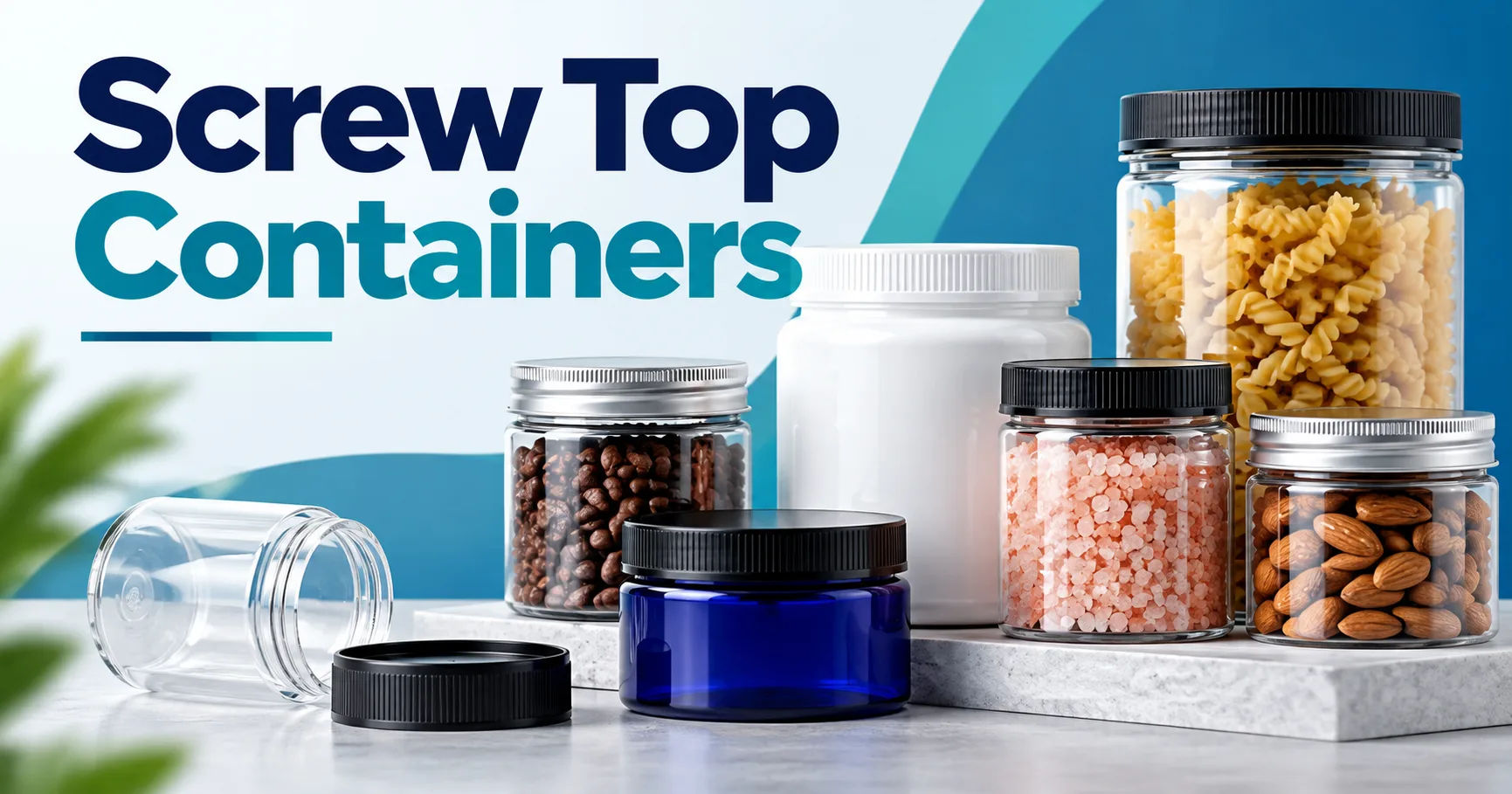 Screw top containers are commonly chosen for this purpose because their threaded lids can create a secure closure while also making the container easy to open and close.
Unlike some single-use packaging, many screw-top designs are made from materials that can withstand repeated handling, cleaning, and storage.
The important point is that reusability does not depend only on the container itself. The material, lid, sealing mechanism, product stored inside, cleaning method, and amount of physical wear all affect how many times it can safely be reused.
A container that looks perfectly fine may still have a damaged seal or worn threads. For that reason, checking the complete closure is just as important as checking the container body.
What Makes a Screw Top Container Reusable?
A reusable container needs to maintain its physical strength and functional properties after repeated use. Several features contribute to this.
Durable Container Materials
The material is one of the first things to consider. Plastic, glass, and certain metal containers can all be designed for repeated use, but they behave differently.
High-quality plastic containers can be lightweight and resistant to impacts. Glass containers are generally resistant to many stains and odors, although they can break if dropped. Metal containers can be durable but may require additional consideration when exposed to moisture or corrosive products.
Manufacturers usually select a material for screw top containers according to the intended application. A container designed for dry ingredients may have different requirements from one intended for liquids, chemicals, cosmetics, or food products.
Strong Threads
The threaded connection is another important feature. The lid needs to turn smoothly and engage correctly with the threads on the container.
If the threads become cracked, flattened, or distorted, the lid may no longer close properly. Repeatedly forcing a damaged lid can make the problem worse.
Good threads should remain stable through normal opening and closing. They should not require excessive force to achieve a secure closure.
A Reliable Seal
An airtight claim depends heavily on the sealing system. Threads alone do not necessarily make a container airtight.
Many designs use a liner, gasket, sealing disc, or molded sealing surface. When the lid is tightened, this component presses against the container opening and helps reduce the movement of air or moisture.
If the sealing component becomes dirty, compressed, cracked, or misplaced, the container may lose its airtight performance even when the lid still appears to close normally.
How Many Times Can They Be Reused?
There is no universal number of uses for all screw-top containers.
Some are specifically manufactured for repeated reuse and may remain functional for a long period when handled correctly. Others are intended primarily for one-time packaging and may not be suitable for repeated cleaning or refilling.
The manufacturer's instructions are therefore important. If a product is labeled as reusable, it generally means the design has been developed with repeated use in mind. However, reusable does not mean indestructible.
The number of reuse cycles can depend on how frequently the container is opened, whether it is washed by hand or in a dishwasher, the temperature it experiences, and whether it is dropped or exposed to harsh substances.
A container used gently at room temperature may last considerably longer than one subjected to constant heat, heavy handling, or aggressive cleaning chemicals.
What Happens to the Airtight Seal Over Time?
The sealing system is often the first area that needs attention.
With repeated use, gaskets and liners can gradually lose their original shape. Some may become harder or softer depending on the material and exposure conditions. Food oils, cleaning chemicals, heat, and ultraviolet light can also affect certain sealing materials.
Even a small change in the seal can reduce performance.
For example, if a gasket no longer presses evenly around the opening, a small pathway may develop between the lid and container. The container might still feel tightly closed, but it may not provide the same level of protection as when it was new.
This is why regular inspection is useful.
Signs of a Worn Seal
Look for visible cracks, cuts, flattening, swelling, discoloration, or deformation. Also pay attention to unusual odors that remain after cleaning.
If a removable gasket can be taken out, inspect both sides. Food particles and residue can collect underneath the gasket and prevent proper contact with the sealing surface.
In some designs, replacing the gasket may restore the container's performance without requiring replacement of the entire container.
Cleaning Reusable Screw Top Containers
Proper cleaning is essential when reusing containers, particularly when they are used for food, beverages, cosmetics, or other products that can leave residue.
The container should be emptied completely before cleaning. Warm water and an appropriate detergent can usually remove ordinary residues, but the exact cleaning method should match the material.
The lid deserves special attention. Threads can trap small amounts of material, especially when thick foods, sauces, powders, or oily products are stored inside.
A container may look clean from the outside while residue remains hidden inside the threads.
Cleaning the Threads
Use a soft brush or suitable cleaning tool to reach threaded areas. Avoid tools that can scratch or gouge the material unless the manufacturer specifically recommends them.
After washing, rinse thoroughly so detergent does not remain on the sealing surfaces.
Allow the container and lid to dry completely before closing them for storage. Trapped moisture can encourage unwanted microbial growth in some applications and can also create odors.
Dishwasher Use
Not every reusable container is dishwasher safe.
High temperatures can deform some plastics, weaken certain seals, or affect printed labels and coatings. Glass may tolerate dishwasher cleaning well, but the lid and sealing components may have different temperature limits.
Always check the manufacturer's instructions before putting a container through a dishwasher.
Can You Reuse Them for Food?
Many reusable screw-top containers are suitable for food storage, provided they are specifically designed and approved for that application.
Food storage introduces additional considerations because the container comes into direct contact with edible products.
A container that previously held a non-food substance should not automatically be reused for food simply because it has been washed. The original contents may have interacted with the material or sealing components.
Food containers should also be checked for staining, cracks, unusual odors, and surface deterioration.
Foods That Can Be More Challenging
Oily foods, strongly colored sauces, spices, and acidic ingredients can leave residues or odors behind. Some plastics may absorb odors or become stained after repeated exposure.
This does not necessarily mean the container is unsafe, but persistent changes can indicate that the material is no longer performing as intended.
For food applications, following the manufacturer's material and temperature guidance is particularly important.
Are They Reusable for Liquids?
They can be, but the closure must be appropriate for the liquid being stored.
A container that works well for dry powders may not provide the same performance with liquids. Liquids can place more demands on the sealing interface, especially when the container is transported, shaken, or stored upside down.
The condition of the gasket becomes especially important.
Before storing a liquid, close the container securely and inspect the closure for signs of leakage. Avoid assuming that a threaded lid is automatically leakproof just because it feels tight.
Airtight and leakproof are related concepts, but they are not always identical. A container can restrict air exchange without being designed to withstand prolonged liquid pressure or inversion.
Reusing Containers With Different Products
Changing what you store inside a container requires some thought.
For example, a container previously used for dry food may be perfectly suitable for another dry product. However, moving from one product category to another can create cleaning and compatibility issues.
Strongly scented substances can leave odors that transfer to later contents. Oils can also remain on surfaces after ordinary washing.
In industrial applications, compatibility is even more important. Certain chemicals, solvents, or concentrated substances can interact with plastics, seals, coatings, or other components.
The fact that a container survived one use does not automatically prove that it is compatible with every other substance.
What Can Damage Reusable Containers?
Repeated use is only one source of wear.
Physical impacts can create cracks or dents. Excessive tightening can damage threads. High temperatures can deform some materials. Harsh chemicals can attack certain plastics or sealing components.
Ultraviolet exposure can also affect some plastics over long periods.
Even repeated stacking can create stress if the container was not designed for that purpose.
Another common problem is overtightening. Many people assume that tighter always means better. In reality, excessive force can deform a gasket or damage the threads.
The goal is a secure closure, not maximum physical force.
How to Know When Replacement Is Necessary
A reusable container should be replaced when it can no longer perform its intended function reliably.
Visible cracks are an obvious reason for replacement. The same applies to severely warped openings, damaged threads, broken lids, or permanently deformed seals.
Repeated leakage is another warning sign.
If the container is supposed to protect sensitive contents from moisture or air but no longer does so, continuing to use it may defeat the entire purpose of the packaging.
For food storage, persistent odors, severe staining, surface degradation, or damage that makes thorough cleaning difficult can also be reasons to replace it.
Don't Ignore Small Damage
Small scratches may not immediately make a container unusable, but deep scratches, cuts, and rough damaged areas deserve attention.
Damaged surfaces can be harder to clean thoroughly. They may also weaken the container over time.
The correct decision depends on the material, application, and manufacturer's guidance.
How to Extend Their Useful Life
Simple handling practices can significantly extend the useful life of reusable containers.
Do not use excessive force when opening or closing the lid. Keep threads clean and free from residue. Store containers away from unnecessary heat and direct sunlight when the material is sensitive to those conditions.
Avoid stacking them in ways that place excessive weight on the lids.
When cleaning, use methods appropriate for the material rather than automatically choosing the hottest temperature or strongest chemical available.
It is also useful to keep lids with their original containers when possible. Mixing lids between similar-looking containers can lead to poor thread engagement or an imperfect seal.
Environmental Benefits of Reuse
Reuse can reduce the number of containers that need to be produced and discarded, particularly when a durable container replaces repeated single-use packaging.
However, environmental performance depends on the entire life cycle of the packaging.
Manufacturing materials consumes resources, and cleaning reusable containers also requires water and energy. The environmental benefit becomes more meaningful when a container is used many times rather than discarded after only a few uses.
Durability therefore matters.
A container that can survive many cleaning and filling cycles has a different environmental profile from one that becomes unusable after a handful of uses.
This is one reason manufacturers continue to focus on stronger materials, better sealing systems, lighter designs, and reusable packaging formats.
Reuse in Commercial and Industrial Settings
Businesses often have more demanding requirements than households.
A company may fill and empty the same type of container hundreds or thousands of times. In that environment, the container needs consistent dimensions, reliable closure performance, suitable materials, and predictable cleaning characteristics.
Quality control becomes important.
Businesses may inspect containers for cracks, deformation, thread damage, seal deterioration, and contamination before allowing them back into circulation.
For sensitive applications, cleaning and sanitation procedures may also need to be documented.
This shows an important distinction between casual household reuse and controlled commercial reuse. Both involve repeated use, but commercial systems generally require much more formal inspection and process control.
Frequently Asked Questions
Are all screw-top containers reusable?
No. Some are designed for repeated use, while others are intended primarily for single-use packaging. Check the manufacturer's instructions and the markings on the container before establishing a reuse routine.
Can an airtight container lose its seal?
Yes. Seals, gaskets, liners, threads, and container openings can wear or become damaged. Dirt and residue can also interfere with the closure.
Should the lid be replaced separately?
If the container design allows replacement parts and the lid or gasket is damaged, replacing that component may restore functionality. The replacement should be compatible with the original container.
Can reusable containers be washed with hot water?
That depends on the material and design. Some tolerate high temperatures, while others may deform or experience seal damage. Follow the manufacturer's temperature recommendations.
How should airtight containers be stored?
Keep them clean and dry, preferably with the lid either loosely placed or stored separately if recommended by the manufacturer. Avoid unnecessary heat and sunlight when the material is sensitive to them.
Are glass containers more reusable than plastic ones?
Neither material is automatically better for every application. Glass can be durable and resistant to many odors and stains, while plastic can be lighter and more resistant to impact. The appropriate choice depends on how the container will be used.
Conclusion
Airtight screw-top containers can absolutely be reusable when they are designed for repeated use and maintained properly. Their durability comes from a combination of material strength, thread quality, sealing performance, and appropriate handling.
The most important thing is not simply whether the container can be opened and closed multiple times. What matters is whether it continues to perform its intended job safely and reliably.
Regular inspection should become part of reuse. Check the container body, threads, lid, gasket, and sealing surface. Look for cracks, deformation, residue, unusual odors, and signs of leakage. If the closure no longer works properly, continuing to use the container defeats the purpose of having an airtight package.
Cleaning also plays a major role. Remove residue from threads and sealing areas, rinse thoroughly, and allow components to dry properly. Avoid cleaning methods that exceed the material's recommended limits.
It is equally important to consider what was previously stored inside. A container suitable for one product may not be appropriate for another, particularly when chemicals, strong oils, solvents, or other aggressive substances are involved.
For households, reusable containers can provide a practical way to organize food, dry goods, liquids, and other suitable products while reducing unnecessary packaging waste. For commercial operations, reuse can be even more valuable when containers are manufactured and maintained as part of a controlled return-and-refill system.
Ultimately, reusability is a combination of design and care. A well-made container can serve for a long time when its limitations are respected. When the material, closure, or sealing system becomes damaged, replacement is the sensible option.
With proper selection, cleaning, inspection, and handling, screw top containers can offer a dependable and practical packaging solution for repeated use.