
A good pair of custom barber aprons does more than protect clothing from hair, water, and styling products. It becomes part of a barber’s everyday work routine. Because an apron can collect loose hair, shaving products, oils, sweat, and product residue throughout the day, proper washing is essential for keeping it clean and extending its useful life.
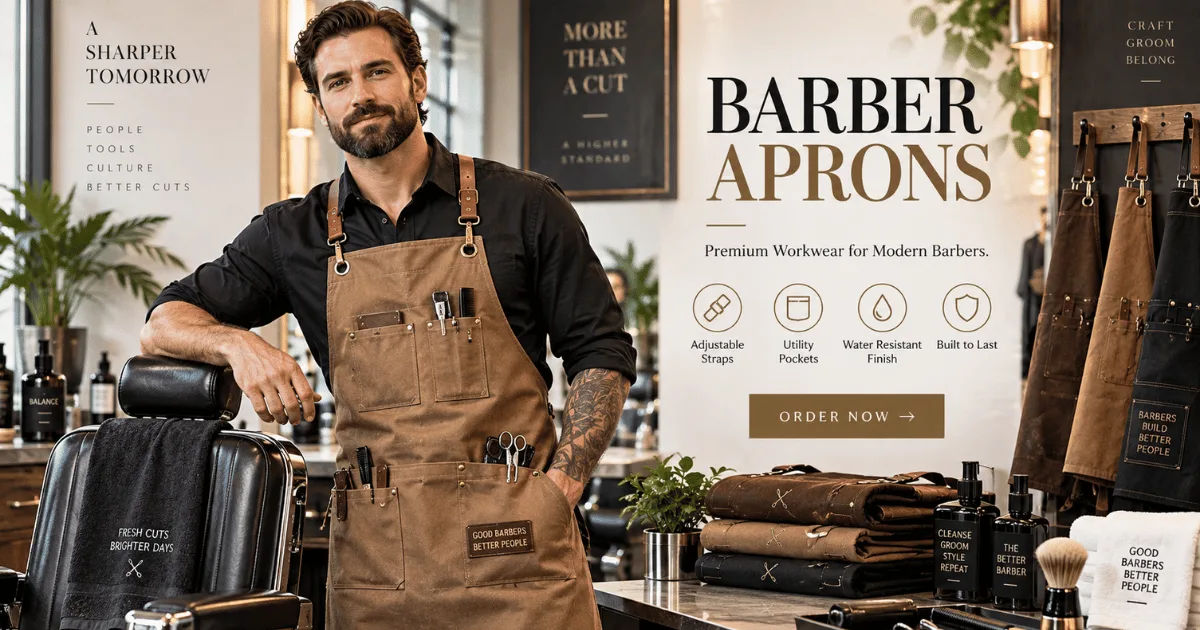
The challenge is that barber aprons are often made from durable materials such as canvas, denim, cotton blends, polyester, or coated fabrics. Custom embroidery, printed logos, leather details, metal hardware, and reinforced stitching can also require special care. Washing an apron incorrectly may cause shrinking, fading, cracking, or damage to its customized features.
Fortunately, washing custom barber aprons does not have to be complicated. The key is to remove loose debris first, check the care instructions, use the appropriate water temperature and detergent, and avoid harsh drying methods unless the manufacturer specifically recommends them.
Why Proper Washing Matters for Barber Aprons
Barbers work in an environment where an apron can become dirty surprisingly quickly. Hair clippings may collect around pockets and seams, while water, shaving cream, hair products, oils, and disinfectants can leave marks on the fabric.
Simply brushing the apron off at the end of the day is not enough for long-term cleanliness.
Regular washing removes buildup that can make fabric look dull or feel stiff. It can also help prevent unpleasant odors from developing, particularly when the apron is worn for long working hours.
Proper care also protects the investment. A high-quality customized apron may be designed for years of daily use, but repeated exposure to excessive heat, aggressive detergents, and rough washing can shorten its lifespan.
Check the Fabric Before Washing
Before putting your apron into a washing machine, identify what it is made from.
Different fabrics respond differently to water, heat, detergents, and agitation. Cotton canvas, for example, may shrink if washed or dried at high temperatures. Polyester generally holds its shape better, while denim may fade with repeated washing.
Some aprons also contain waxed, water-resistant, or coated materials. These should not automatically be treated like ordinary cotton garments.
Read the Care Label
The care label should be your first source of information. Look for instructions about machine washing, hand washing, water temperature, bleach, tumble drying, and ironing.
If the manufacturer's instructions conflict with general washing advice, follow the manufacturer's instructions.
This is particularly important for custom barber aprons with unusual materials or specialized finishes.
Consider Customized Features
Look closely at the apron before washing it.
Does it have embroidered lettering? A printed logo? Leather straps? Metal buckles? Decorative patches? Special pockets?
These details can affect how the apron should be cleaned.
Embroidery is usually durable, but excessive heat and harsh chemicals may weaken threads or cause colors to fade. Leather components may also require completely different care from the fabric surrounding them.
Remove Hair Before Washing
One of the most important steps is also one that is easy to overlook.
Remove loose hair before washing the apron.
Do not rely on the washing machine to remove large amounts of barber hair. Loose hair can become trapped in pockets, seams, cuffs, and the washing machine itself.
Shake and Brush the Apron
Take the apron outside or over an appropriate surface and shake it thoroughly.
Use a soft clothes brush, lint roller, or similar tool to remove remaining hair. Pay particular attention to pockets and seams because small hair clippings tend to collect there.
If there is a large amount of hair, empty it into a suitable waste container rather than washing it down a sink or drain.
Empty Every Pocket
Check every pocket before washing.
Barbers may carry combs, clips, pens, razors, small tools, or other items throughout the day. Leaving an object inside a pocket can damage the item, damage the apron, or cause problems during the washing cycle.
Turn pockets inside out where possible and inspect them carefully.
Pre-Treat Visible Stains
Washing works better when heavily soiled areas receive some attention before the main cycle.
Look for shaving cream, hair product, oil, makeup, food, or other stains. Apply a small amount of suitable liquid detergent or fabric-safe stain treatment to the affected area.
Allow it to sit according to the product instructions.
Avoid aggressively scrubbing customized areas. Hard brushing may disturb embroidery or damage printed designs.
For an unfamiliar stain, test the cleaning product on a hidden area first.
What Water Temperature Should You Use?
For most washable barber aprons, cool or lukewarm water is a sensible starting point.
Hot water can be useful for certain heavily soiled fabrics, but it also increases the risk of shrinking, fading, and damaging some customized components.
Cotton and cotton-heavy fabrics deserve particular attention because they can shrink when exposed to high temperatures.
If the care label permits warm washing, follow those instructions. If there is no clear guidance, cooler water is generally the safer choice for preserving color and shape.
Choose the Right Detergent
A mild laundry detergent is usually sufficient for everyday cleaning.
There is rarely a need to use extremely strong detergent simply because the apron is used in a barbershop. Strong chemicals can gradually affect fabric fibers, colors, embroidery, and decorative elements.
Avoid using bleach unless the care instructions specifically permit it.
Bleach can discolor colored fabrics and may weaken certain fibers. It can also cause unexpected damage to logos and other customized details.
Avoid Excessive Fabric Softener
Fabric softener is not always necessary.
Some products can leave a coating on fabrics that affects absorbency or the feel of the material. For work aprons, maintaining durability and easy cleaning is generally more important than making the fabric unusually soft.
Follow the fabric manufacturer's recommendations.
How to Machine Wash Custom Barber Aprons
If the care label allows machine washing, prepare the apron before putting it into the machine.
Close zippers, fasten snaps, and secure straps where possible. Turn the apron inside out if the manufacturer recommends doing so, especially when protecting printed or decorative surfaces is important.
Wash it with similar colors.
Avoid filling the machine excessively. Overloading creates additional friction and prevents garments from moving freely through the water.
Choose the recommended cycle. A normal cycle may be appropriate for sturdy canvas or cotton, while a gentler cycle can be preferable for lighter or more delicate materials.
For custom barber aprons with embroidery or printed logos, a gentler approach can help preserve the customization.
When Should an Apron Be Hand Washed?
Hand washing can be a better option when the apron contains delicate materials or details that could be damaged in a washing machine.
This may include certain coated fabrics, leather components, decorative attachments, or manufacturer's instructions that specifically recommend hand washing.
Fill a clean basin with the recommended water temperature and add a small amount of mild detergent.
Gently work the water through the apron. Concentrate on visibly dirty areas without aggressively rubbing customized sections.
Rinse thoroughly until detergent is removed.
Do not twist the apron aggressively to remove water. Excessive twisting can distort fabric and put unnecessary stress on stitching, straps, and hardware.
How Should Custom Barber Aprons Be Dried?
Drying is just as important as washing.
Many apron problems occur because people wash carefully but then expose the garment to excessive dryer heat.
Air Drying Is Often the Safest Choice
When possible, air drying is a simple way to reduce heat-related damage.
Hang the apron in a well-ventilated area and allow it to dry completely. Keep it away from excessive direct sunlight if the fabric or logo is prone to fading.
Make sure the apron is properly supported while drying. Heavy wet canvas can become quite heavy, so a strong hanger or suitable drying surface is useful.
Use a Dryer Carefully
If the care label allows tumble drying, use the recommended temperature.
Avoid assuming that a durable apron can tolerate the highest dryer setting. Repeated high heat can contribute to shrinking, fading, and deterioration of some customized elements.
If you're uncertain, low heat or air drying is generally a safer approach.
Can Custom Barber Aprons Be Ironed?
It depends on the material and customization.
Some fabrics can be ironed safely, while others may be damaged by direct heat. Printed logos can be particularly sensitive.
If ironing is permitted, check the manufacturer's recommended temperature.
Avoid placing a hot iron directly over printed graphics, embroidery, or other decorative elements unless the care instructions specifically say it is safe.
In many cases, allowing the apron to dry properly and smoothing it by hand is enough to maintain a professional appearance.
How Often Should Barber Aprons Be Washed?
There is no single washing schedule that works for every barber.
A barber who wears an apron for several hours and handles many clients may need to wash it much more frequently than someone who uses an apron occasionally.
Daily washing may be appropriate when the apron becomes heavily contaminated with hair, product residue, sweat, or other debris.
If the apron remains relatively clean, less frequent washing may be sufficient, provided it is brushed and aired between uses.
Having multiple custom barber aprons can make this easier. One can be in use while another is being washed and dried.
What Should You Avoid When Washing Barber Aprons?
A few common mistakes can cause unnecessary damage.
Do Not Use Excessive Heat
High temperatures can shrink some fabrics and damage customization.
Do Not Use Harsh Chemicals Without Checking
Strong bleach or aggressive stain removers may damage color, fabric, embroidery, or printing.
Do Not Wash Heavy Hair Into the Machine
Remove loose hair first. It is easier on both the apron and washing machine.
Do Not Scrub Logos Aggressively
Customized areas should receive gentle treatment unless the manufacturer provides different instructions.
Do Not Store the Apron While Damp
A damp apron can develop unpleasant odors and may encourage mildew growth.
Allow it to dry completely before folding and storing it.
How to Keep Custom Barber Aprons Cleaner Between Washes
Good maintenance can reduce how frequently deep washing is necessary.
After each workday, shake out loose hair and brush the apron. Empty the pockets and hang it somewhere with good airflow.
If a small spill occurs, clean it promptly rather than allowing it to become a permanent stain.
Keep clean aprons separate from heavily soiled workwear. This simple habit can help prevent unnecessary transfer of dirt and odors.
If multiple barbers share a workspace, each person's apron should also be stored in a clean, designated location.
When Should You Replace a Barber Apron?
Even excellent care cannot make an apron last forever.
Eventually, fabric may become thin, seams may weaken, straps may deteriorate, or customized graphics may become significantly damaged.
Replacement is worth considering when an apron can no longer provide reliable protection or maintain a professional appearance.
However, visible wear does not always mean the apron needs immediate replacement. Minor fading or superficial marks may simply reflect regular use.
The important question is whether the apron remains structurally sound, comfortable, hygienic, and suitable for professional work.
Conclusion
Washing custom barber aprons correctly is mostly about using a careful, consistent routine rather than relying on aggressive cleaning. Start by removing loose hair, emptying the pockets, checking the care label, and identifying the fabric and customized components.
For most washable aprons, mild detergent and cool or lukewarm water provide a practical cleaning approach. Avoid unnecessary bleach and excessive heat, and pay special attention to embroidery, printed designs, leather, hardware, and coated materials.
Drying also deserves consideration. Air drying is often a safe choice, while machine drying should follow the manufacturer's temperature recommendations.
Most importantly, do not wait until an apron becomes extremely dirty before thinking about maintenance. Brushing away hair, airing the apron after use, treating stains promptly, and washing it according to its material can help preserve both its appearance and performance.
A barber apron is a working tool. When it is kept clean and properly maintained, it not only looks more professional but can also remain comfortable and dependable through countless appointments. Taking a few extra minutes to care for it after each use is usually much easier than replacing a damaged apron prematurely.